 Tim Popp

Arizona has long been a magnet for real estate investors, but the landscape is shifting. Whether you are eyeing a luxury short-term rental in Scottsdale or a steady long-term play in Tucson, the way you finance these deals can make or break your ability to scale.

As an investor, you know that the traditional mortgage process can be a headache. Providing years of tax returns, explaining business write-offs, and calculating debt-to-income (DTI) ratios often limits how many properties you can own. That is where the Debt Service Coverage Ratio (DSCR) loan comes into play, specifically tailored for the unique dynamics of the Arizona market.
My name is Tim Popp, and as a Branch Manager at West Capital Lending (NMLS #2a20007), I have helped investors across 36 states navigate these waters. In this guide, we are going to dive deep into how you can use DSCR loans to capitalize on the Phoenix short-term rental (STR) market and the stable long-term rental (LTR) opportunities in Tucson.
What Exactly Is an Arizona DSCR Loan?
A DSCR loan is a type of non-QM (non-qualified mortgage) loan that allows you to qualify for a mortgage based on the cash flow of the property rather than your personal income. For many of my clients who are self-employed or have complex tax returns, this is a game-changer.
Instead of looking at your W-2s or 1040s, we look at the property’s ability to “service” its own debt. If the rental income covers the principal, interest, taxes, insurance, and HOA dues (PITIA), you are likely on the right track. This allows you to bypass the restrictive DTI limits that often stop conventional financing in its tracks.
When you use a DSCR loan in Arizona, you are essentially telling the lender that the asset is the primary driver of the deal. This is why these loans are so popular for scaling portfolios quickly. You can learn more about the specifics in my guide on DSCR Loan Requirements: What Lenders Actually Look For.
Phoenix STR Market Dynamics: More Than Just Spring Training
The Phoenix metropolitan area, often called the Valley of the Sun, is one of the most competitive and lucrative short-term rental markets in the country. However, the dynamics here are unique. You aren’t just renting to vacationers; you are catering to a rotating door of high-impact events.
From the Waste Management Phoenix Open and Barrett-Jackson Auto Auction to MLB Spring Training and major bowl games, Phoenix sees massive spikes in demand throughout the first quarter of the year. During these peak months, daily rates can triple or quadruple, providing a significant boost to your annual gross income.
When applying for a DSCR loan on a Phoenix STR, we typically look at the “market rent” determined by an appraiser. However, many savvy investors also provide data from platforms like AirDNA or Rabbu to demonstrate the property’s true earning potential as a short-term rental. This is a critical distinction that can help you qualify for a higher loan amount.
The Regulatory Shift in the Valley
You must stay informed about local regulations. Cities like Scottsdale and Phoenix have implemented stricter licensing requirements and noise monitoring mandates. When you are looking for your next property, ensure you are factoring in these compliance costs.
Lenders generally want to see that your property is in a zone that permits short-term rentals. If you are buying in an area with a pending ban, it could complicate your financing. Always do your due diligence on the specific municipality’s stance on STRs before signing the purchase contract.
Ready to see what you qualify for?
See your options in minutes — we’ll get you a real answer fast.
Navigating the “Snowbird” Effect: Arizona’s Seasonality
If you are investing in Phoenix or Scottsdale, you have to account for the “Snowbird” effect. Arizona’s tourism is highly seasonal. While January through April are incredibly lucrative, the summer months can see a significant dip in occupancy as temperatures climb.
DSCR lenders understand this seasonality. When we evaluate a property, we aren’t just looking at what you made in March. We are typically looking at the annualized income. This helps smooth out the peaks and valleys of the desert climate.
To mitigate the summer slump, many of my successful clients pivot their strategy. They might offer “staycation” specials for locals or target traveling nurses and corporate relocations during the off-season. When you can show a consistent track record of income—even in the heat of July—it makes your DSCR application much stronger.
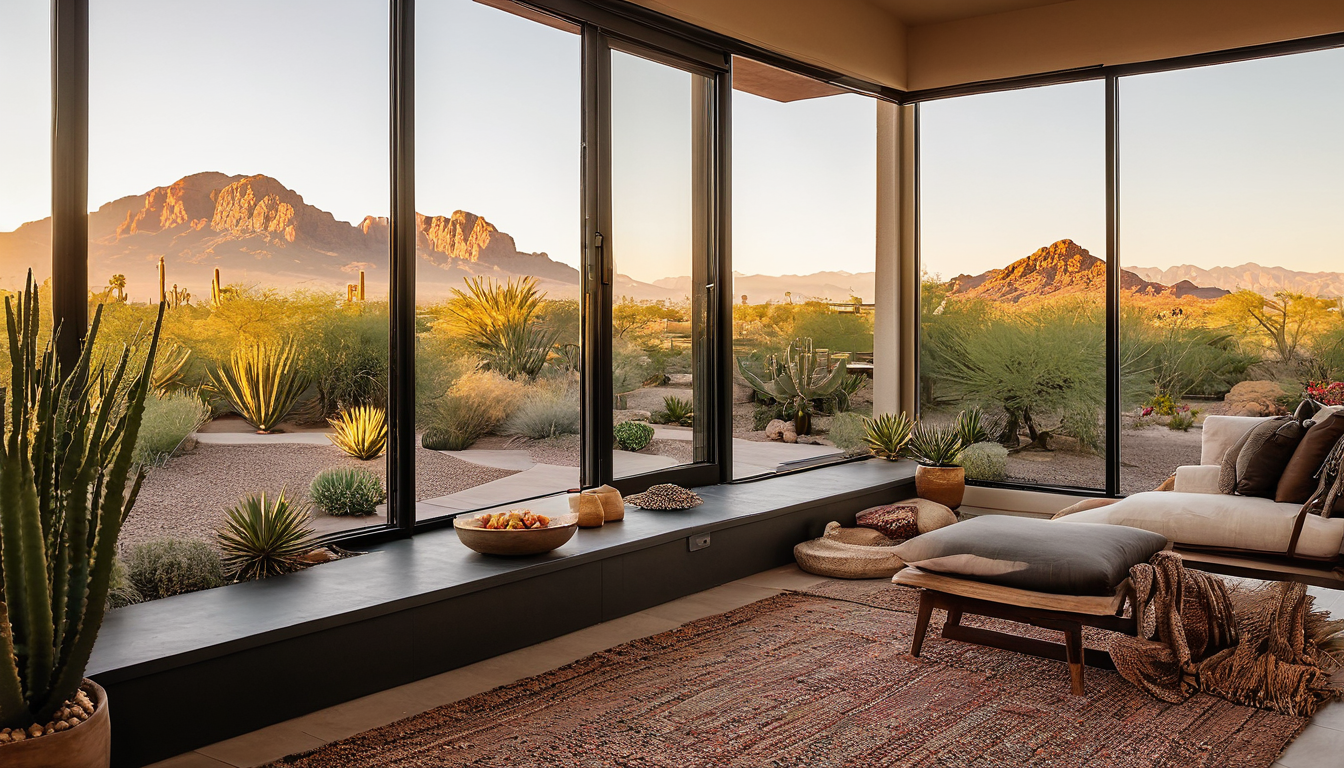
Tucson: The Strategic Pivot to Long-Term Rentals
While Phoenix gets most of the headlines, Tucson offers a very different, yet equally compelling, opportunity for investors. Tucson is often seen as the more stable, “value-add” market compared to the high-volatility STR market in Phoenix.
Tucson’s economy is anchored by the University of Arizona, Davis-Monthan Air Force Base, and a growing tech sector including companies like Raytheon. This creates a consistent demand for long-term rentals. For an investor, this means lower turnover costs and a more predictable cash flow model.
DSCR loans are perfect for Tucson LTRs because the rents are generally high enough relative to property values to produce a healthy DSCR ratio. If you are looking for a “set it and forget it” addition to your portfolio, Tucson’s multi-family or single-family long-term rentals are worth a look. You might find that DSCR vs Conventional Loans: Which Is Better for Real Estate Investors? is a key question to answer as you weigh these two markets.
The “Student Housing” Factor in Tucson
Investing near the University of Arizona can be incredibly profitable. However, be aware that some lenders view student housing differently. They may require a slightly higher DSCR ratio or a lower loan-to-value (LTV) to account for the increased wear and tear. If you are targeting this niche, make sure your property management plan is solid, as lenders will take that into account during the underwriting process.
Calculating Your DSCR Ratio for Arizona Properties
The math behind a DSCR loan is straightforward, but it’s vital to get it right. The formula is: Gross Monthly Rental Income / Monthly Debt Service (PITIA).
For example, if your Phoenix STR generates an average of $5,000 per month and your total mortgage payment (including taxes, insurance, and HOA) is $4,000, your DSCR is 1.25. Most lenders prefer to see a ratio of 1.20 or higher, though some programs allow for 1.0 or even “no ratio” options if you have a significant down payment and high credit score.
- 1.25 or higher: You typically get the best terms and highest LTVs.
- 1.00 to 1.24: This is the “sweet spot” where most deals happen. It shows the property is self-sustaining.
- Below 1.00: This means the property is cash-flow negative. You can still get a loan, but you may need more equity (a larger down payment) to offset the risk.
Because Arizona property taxes are relatively low compared to states like Texas or New Jersey, investors here often find it easier to hit those higher DSCR marks. This is one of the “hidden” benefits of the Arizona market that helps your borrowing power.
Why Choose a DSCR Loan Over Conventional Financing?
You might be wondering why you wouldn’t just go with a conventional loan. If you can qualify for one, the interest rate might be slightly lower. However, conventional loans have a “ceiling.” Most investors hit a wall after 4 to 10 properties because of Fannie Mae and Freddie Mac limits.
DSCR loans offer several advantages that conventional loans simply cannot match:
- No Limit on Properties: You can own 10, 20, or 50 properties using DSCR financing. There is generally no limit to the size of your portfolio.
- Borrow as an Entity: You can close the loan in the name of your LLC. This provides a layer of asset protection that is difficult to achieve with conventional loans.
- Faster Closing: Because we aren’t digging through your personal tax returns and business P&Ls, the process is typically much faster. We focus on the appraisal and the property’s income.
- Preserve Your DTI: Since these loans don’t typically show up on your personal credit report in the same way, they don’t impact your ability to get a personal mortgage for your primary residence.
If you are looking to expand, you might also consider Using DSCR Cash-Out to Buy Your Next Property. This allows you to tap into the equity of your existing Arizona holdings to fund your next acquisition.
Qualifying for an Arizona DSCR Loan: What You Need
While the process is streamlined, there are still specific requirements you should be prepared for. Here is what I generally look for when evaluating an Arizona deal:
- Credit Score: Typically, a minimum score of 620 is required, but a 700+ score will unlock the best LTVs and pricing.
- Loan-to-Value (LTV): Most DSCR programs require a 20% to 25% down payment. For a refinance, you can generally go up to 75% or 80% LTV.
- Reserves: Lenders typically want to see 3 to 6 months of PITIA in liquid reserves (checking, savings, or 401k) to ensure you can handle a vacancy.
- Appraisal with Rent Schedule: The appraiser will need to complete Form 1007 (for LTR) or provide comparable STR data to verify the income.
It is important to remember that every deal is unique. Just because one property didn’t work doesn’t mean the next one won’t. The key is working with a partner who understands the nuances of the Arizona market—from the heights of Camelback Mountain to the historic districts of Tucson.
Final Thoughts for Arizona Investors
The Arizona real estate market remains one of the most dynamic in the country. Between the high-octane STR potential in Phoenix and the rock-solid LTR fundamentals in Tucson, there is something for every type of investor. Using a DSCR loan allows you to move with the speed and flexibility required to win in this environment.
Don’t let personal income requirements or DTI limits slow your growth. By focusing on the income potential of the property itself, you can build a robust portfolio that stands the test of time and the heat of the Arizona summer. Whether you are a seasoned pro or just starting your journey, the DSCR path is one of the most efficient ways to scale.
If you are ready to look at a specific property or want to see how much you may qualify for, I am here to help. Arizona’s market moves fast, and having your financing lined up is the first step to securing your next great investment.
Talk to Tim about your deal
Whether you’re buying your first rental or your twentieth — straight answers, no runaround.
Tim Popp, NMLS #2039627 | West Capital Lending | Licensed in 36 states + DC. This content is for informational purposes only and does not constitute a commitment to lend or a guarantee of loan approval. All loan programs subject to borrower eligibility, property requirements, and lender terms.