 Tim Popp
🎯 TL;DR — Quick Answer
DSCR loans are for long-term, cash-flowing rental properties, qualifying based on the property's income, not personal DTI. Hard money loans are short-term, higher-cost financing for fix-and-flip projects, based on the After Repair Value (ARV). Choosing the right one depends entirely on your investment strategy, and Tim Popp (NMLS #2039627) can help.
You have found the perfect investment property. The numbers pencil out, the location is prime, and you are ready to pull the trigger. But then comes the big question that every seasoned investor eventually faces: how are you going to fund it?
In the world of professional real estate investing, the “how” is often more important than the “how much.” Choosing the wrong financing vehicle can eat your margins, stall your progress, or even kill the deal entirely. Today, we are breaking down the two heavyweights of the private money world: DSCR loans and Hard Money loans.

Understanding the Fundamental Difference
📌 From Tim — In Practice
Investors I work with often use both products, but for different stages of a project. A hard money loan is the perfect tool to acquire and renovate a distressed property quickly. Then, once the property is stabilized and rented out, they refinance into a long-term, 30-year fixed DSCR loan to hold it as a rental. This is a classic BRRRR strategy in action.
Before we dive into the weeds, let’s establish the core philosophy of each loan type. While both are considered “private” or “non-QM” (non-qualified mortgage) products, they serve very different purposes in your portfolio growth strategy.
Hard money is essentially a bridge. It is designed to get you from point A to point B as quickly as possible, usually when the property is in a state of transition or disrepair. It is fast, expensive, and temporary.
DSCR loans, on the other hand, are designed for the long haul. They are the professional investor’s alternative to a conventional mortgage. Instead of looking at your tax returns and W2s, these loans qualify you based on the property’s ability to generate income.
If you are wondering how these compare to traditional bank products, you might find our guide on DSCR vs Conventional Loans: Which Is Better for Real Estate Investors? helpful for your long-term planning.
What is a DSCR Loan?
DSCR stands for Debt Service Coverage Ratio. It is a metric that lenders use to determine if a property’s rental income can cover its monthly debt obligations. If the property makes more than it costs to own, you are generally in a good position to qualify.
The beauty of the DSCR loan is that it ignores your personal Debt-to-Income (DTI) ratio. As long as the property “covers” itself, your personal income—or lack thereof—doesn’t have to be the primary focus of the underwriting process. This is a game-changer for self-employed investors who have significant write-offs on their tax returns.
Typically, these loans are 30-year fixed-rate products, though 40-year options with interest-only periods are often available. They are meant for “turn-key” or “rent-ready” properties that are already generating income or are ready to be listed on the market immediately.
To get a better idea of the specifics, you should review the DSCR Loan Requirements: What Lenders Actually Look For to see if your current deal fits the mold.
Ready to see what you qualify for?
See your options in minutes — we’ll get you a real answer fast.
What is a Hard Money Loan?
Hard money is asset-based lending in its purest form. These lenders care almost exclusively about the value of the collateral and your “skin in the game.” They are the go-to choice for fix-and-flip projects or properties that are currently uninhabitable.
A hard money loan is generally short-term, with most terms lasting between 6 to 24 months. These loans are often structured with interest-only payments and a “balloon” payment at the end. The goal is to renovate the property and either sell it or refinance it into a long-term loan before the term expires.
Hard money is known for its speed. While a traditional loan might take 30 to 45 days to close, a hard money lender can typically fund a deal in 7 to 14 days. This speed allows you to compete with cash buyers in a hot market.
Comparing the Two: Speed, Cost, and Qualification
When you are weighing these two options, you need to look at three primary factors: how fast you need the money, how much you are willing to pay for it, and the current condition of the asset.
- Qualification: DSCR loans require a credit check and an appraisal that includes a rent schedule. Hard money focuses more on the After Repair Value (ARV) and your experience as a flipper.
- Property Condition: DSCR loans generally require the property to be in good, livable condition. Hard money thrives on “distressed” properties that need significant structural or cosmetic work.
- Timeline: Hard money can close in about a week. DSCR loans typically take 21 to 30 days to close, though some files may move faster or slower depending on the appraisal turn times.
- Interest Rates: Hard money carries the highest interest rates in the industry. DSCR rates are generally lower than hard money but higher than conventional loans. You can read more about this in our article: Are DSCR loan rates typically higher than conventional investment property loans, and is the trade-off worth it?
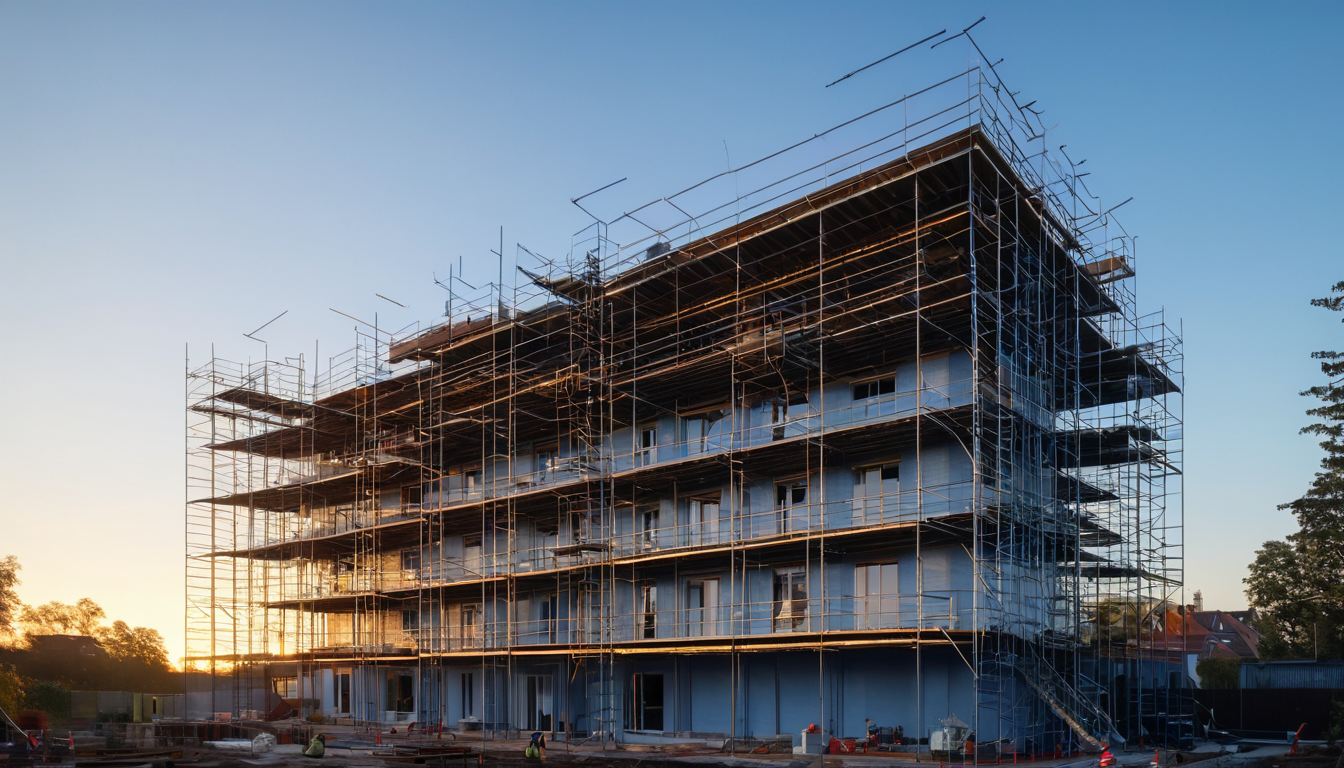
When to Choose a DSCR Loan
You should lean toward a DSCR loan if your goal is “buy and hold.” If you are building a portfolio of rental properties to create passive income or long-term wealth, the DSCR loan is your best friend. It offers the stability of a fixed rate and a long amortization period.
DSCR is also the right choice if the property is already occupied by a tenant or is in “move-in” condition. There is no reason to pay the high costs of hard money if the property doesn’t need a massive renovation to reach its full potential.
Many investors use DSCR loans to scale quickly. Because these loans don’t show up on your personal DTI in the same way a traditional mortgage does, you aren’t limited by the “10-property cap” that many conventional lenders enforce. You can continue to grow as long as your properties are profitable.
When Hard Money is the Better Fit
Hard money is the undisputed king of the “Fix and Flip.” If you are buying a house with a caved-in roof or outdated electrical systems, a DSCR lender won’t touch it. The hard money lender, however, will see the potential value and fund the purchase plus a portion of the renovation costs.
You might also choose hard money when you are in a bidding war. If a seller needs to close in 10 days and you can’t get a traditional appraisal done in time, the speed of hard money can help you win the deal. You can always refinance into a DSCR loan later once the property is stabilized.
Hard money is also useful for investors with lower credit scores who have significant equity. While DSCR lenders typically look for a minimum credit score (often in the mid-600s), hard money lenders are sometimes more flexible if the deal has a massive amount of equity or a very low Loan-to-Value (LTV) ratio.
The Math: How DSCR is Calculated
Because the DSCR ratio is the heart of the loan, it’s vital to understand the math. The formula is simple: Gross Monthly Rental Income divided by the PITI (Principal, Interest, Taxes, and Insurance) plus any HOA dues.
For example, if a property rents for $2,500 and the total monthly mortgage payment (including taxes and insurance) is $2,000, your DSCR is 1.25. Most lenders prefer to see a ratio of 1.0 or higher, meaning the property at least breaks even.
However, some programs allow for “No-Ratio” DSCR loans where the property doesn’t even have to cover the full debt, though these typically require a higher down payment. For a deep dive into these calculations, check out How Lenders Actually Calculate Your DSCR Ratio.
Leveraging Both: The BRRRR Strategy
The most successful investors don’t just choose one or the other—they use both in a specific sequence. This is commonly known as the BRRRR method: Buy, Rehab, Rent, Refinance, Repeat.
In this scenario, you use Hard Money to “Buy” and “Rehab” the property. Because the property is distressed, you get it at a discount. The hard money lender provides the capital to fix it up, increasing the property’s value significantly.
Once the work is done and you “Rent” it out to a tenant, you then “Refinance” the hard money loan into a DSCR loan. This moves you from a high-interest, short-term debt into a lower-interest, long-term stable mortgage. Because the value has increased, you may even be able to do a “cash-out” refinance to get your initial investment back, allowing you to “Repeat” the process.
Prepayment Penalties: A Critical Factor
One thing you must watch out for when choosing between these two is the prepayment penalty. DSCR loans almost always come with a prepayment penalty, typically ranging from one to five years. This is because the lender is looking for long-term interest yield.
Hard money loans usually do not have long-term prepayment penalties, though they may have a “minimum interest” clause (e.g., you must pay at least 3 or 4 months of interest even if you flip the house in 30 days). Always read the fine print to ensure the loan terms align with your exit strategy.
If you plan to sell the property in 12 months, a DSCR loan is likely a bad choice due to the penalty. If you plan to hold it for 10 years, the penalty doesn’t matter, and the lower interest rate of the DSCR loan will save you a fortune over time.
Making the Final Decision
Choosing the right loan comes down to your exit strategy. Ask yourself: “What is my goal for this property in 24 months?”
If the answer is “to have a tenant paying down my mortgage while the property appreciates,” then you are looking for a DSCR loan. If the answer is “to have the property sold to a retail buyer after a full kitchen and bath remodel,” then hard money is your tool.
As an investor, you are a problem solver. Your financing is just one of the tools in your belt. At West Capital Lending, we specialize in helping you identify which tool is the sharpest for the specific deal on your desk. Whether you are looking for the speed of an asset-based bridge or the stability of a rental loan that qualifies based on income, we can help you navigate the landscape.
Every deal is unique, and the “right” choice can change as the market shifts. Stay focused on the numbers, understand your timeline, and always have your exit strategy mapped out before you sign the closing docs. Happy investing.
Talk to Tim about your deal
Whether you’re buying your first rental or your twentieth — straight answers, no runaround.
Tim Popp, NMLS #2039627 | West Capital Lending | Licensed in 36 states + DC. This content is for informational purposes only and does not constitute a commitment to lend or a guarantee of loan approval. All loan programs subject to borrower eligibility, property requirements, and lender terms.
For Different Reader Perspectives
🏠 First-Time Buyer
Quick answer: This article compares two types of loans used by real estate investors—not first-time homebuyers. DSCR and hard money loans are for people buying rental properties or fixer-uppers to resell, not for someone buying a home to live in.
From Tim: If you're buying your first home to live in, you'll want a conventional, FHA, or VA loan instead. Give me a call and I'll point you in the right direction for your situation.
💼 Self-Employed
Quick answer: DSCR loans qualify you based on property income, not your 1099s or tax returns—ideal for long-term rentals. Hard money is fast, asset-based, and built for fix-and-flips. Choose based on your timeline and whether the property is rent-ready.
From Tim: If your tax returns are full of write-offs, DSCR and Bank Statement loans let you qualify without digging through W2s you don't have. It's a smarter path for self-employed investors like you.
🎖️ Veteran
Quick answer: DSCR loans are for income-producing rentals you'll hold long-term. Hard money is short-term financing for flips or major rehabs. If you're living in the property, your VA loan is likely the best option—0% down and no PMI.
From Tim: Most vets should use their VA benefit for primary homes first. But if you're scaling a rental portfolio and have already used your entitlement, DSCR could be your next move.
🏘️ Investor
Quick answer: DSCR loans are built for long-term rental holds with 30-year terms and no personal income docs—perfect for scaling. Hard money is short-term, asset-based funding for rehabs. If you're building a portfolio, DSCR wins for cash flow and stability.
From Tim: If you're doing BRRRR or stacking rentals, DSCR is your workhorse. It qualifies on rent, works with LLCs, and doesn't hit you with personal DTI. Hard money's for flips—not holds.
🏡 Refi / HELOC
Quick answer: If you're a homeowner with equity, you've got options beyond DSCR or hard money. HELOCs, cash-out refis, and HELOANs can unlock capital for investment properties or debt consolidation—each with different rates, costs, and payment structures.
From Tim: Most homeowners don't realize their equity is the cheapest money they can access. I help clients compare HELOC flexibility vs refi savings daily—it depends on your goals and timeline.