 Tim Popp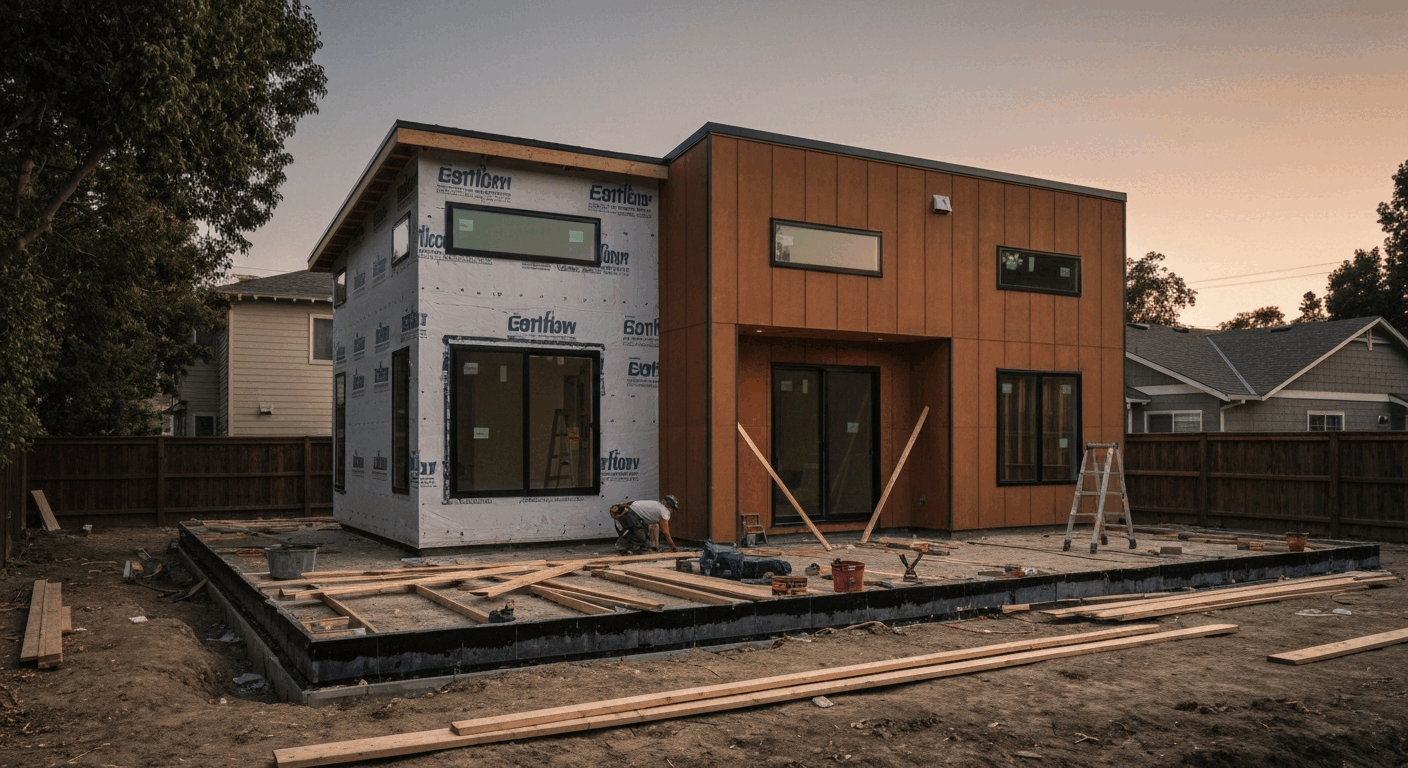

🎯 TL;DR — Quick Answer
California ADU (Accessory Dwelling Unit) construction can be funded via a HELOC on the primary residence. California SB 9 and AB 68 made ADUs nearly universal — converting backyards into rental income. Tim Popp (NMLS #2039627) helps California homeowners structure HELOC-to-ADU financing.
California homeowners, have you ever looked at that unused space in your backyard and envisioned not just a garden, but a valuable income stream or a flexible living solution for your family? With the Golden State’s persistent housing crunch and forward-thinking Accessory Dwelling Unit (ADU) legislation, that vision is more attainable than ever. Building an ADU can transform your property, significantly boost its value, and provide a steady rental income or much-needed space. And when it comes to financing this transformative project, a Home Equity Line of Credit (HELOC) is emerging as one of the most powerful and flexible tools to make it happen.
The journey to building an ADU involves understanding local regulations, managing construction costs, and most importantly, securing the right financing. A HELOC offers a unique blend of flexibility, competitive rates, and access to your home’s built-up equity, making it an ideal partner for the phased nature of an ADU construction project. If you’re ready to unlock your property’s full potential and contribute to California’s housing solution, read on to discover how a HELOC can be your key.
Curious about your ADU financing options?
Find out how much equity you can leverage for your backyard rental dream.
The California ADU Boom: A Solution to the Housing Crisis and More
📌 From Tim — In Practice
In my experience, the CA ADU + HELOC strategy is one of the smartest plays I see California homeowners execute. Tap 0K from your HELOC, build a 0K ADU, rent it for ,500-,000/mo. The rental income often services the entire HELOC payment AND adds equity to the property.
California has been at the forefront of tackling its housing affordability crisis through innovative policy. Recognizing the immense potential of existing single-family lots, state lawmakers enacted groundbreaking legislation designed to streamline and encourage ADU construction. Laws like SB 9 and SB 10 have significantly simplified the process, often overriding restrictive local ordinances and making it easier for you to build additional housing on your property.
These laws have created what many are calling an “ADU boom” across the state. They’ve removed many of the traditional hurdles, such as restrictive zoning, minimum lot sizes, and lengthy permit processes, making it more feasible for the average homeowner to become a housing provider. The result is a surge in backyard homes, junior ADUs (JADUs), and garage conversions, all contributing to California’s housing supply one property at a time. Beyond just increasing housing stock, ADUs offer a multitude of benefits:
- Increased Property Value: An expertly built ADU can significantly boost your home’s market value, often providing a strong return on investment.
- Passive Income Stream: Renting out your ADU can provide a steady and substantial monthly income, helping with mortgage payments or supplementing your lifestyle.
- Multi-Generational Living: ADUs offer an ideal solution for keeping aging parents close by, providing independent living for adult children, or housing for nannies, all while maintaining privacy.
- Flexible Space: Beyond rentals, an ADU can serve as a dedicated home office, an art studio, a gym, or a guest house, adapting to your evolving needs.
- Sustainable Development: By utilizing existing infrastructure and reducing urban sprawl, ADUs contribute to more sustainable and efficient community growth.
The opportunity to build an ADU is not just about real estate; it’s about financial empowerment, family flexibility, and contributing positively to your community. It’s a smart investment that pays dividends in many forms.
Ready to explore how an ADU can transform your property?
Let’s discuss your vision and the financing options available to make it a reality.
What is a HELOC and Why is it Ideal for ADU Financing?
A Home Equity Line of Credit, or HELOC, is a flexible loan product that allows you to borrow against the equity in your home. Think of it like a revolving credit line secured by your home’s value, much like a credit card, but with much lower interest rates and secured by a valuable asset. You’re approved for a maximum credit limit based on your equity, and you can draw funds as needed, repaying only what you’ve borrowed, plus interest. This flexibility makes it distinct from a traditional home equity loan, which provides a lump sum upfront.
HELOCs are particularly well-suited for ADU construction for several compelling reasons. First and foremost, they offer incredible flexibility in how you access funds. Building an ADU often involves staggered costs – design fees, permits, foundation work, framing, finishes, and so on, spread out over several months, sometimes even a year or more. A HELOC allows you to draw funds exactly when you need them for each stage of construction, rather than taking a large lump sum upfront and paying interest on money sitting idle. This “just-in-time” financing can save you a significant amount in interest charges and helps manage your project’s cash flow efficiently, preventing you from over-borrowing or having funds tied up unnecessarily.
Second, the interest rates on HELOCs are generally competitive, especially compared to unsecured personal loans or credit cards. The interest may also be tax-deductible if the funds are used to build, buy, or substantially improve the home securing the loan, which an ADU typically qualifies as. This potential tax benefit can further reduce the overall cost of your financing (always consult a qualified tax advisor for specifics regarding your individual situation). Finally, a HELOC allows you to keep your existing low-rate first mortgage in place, avoiding a full refinance which might not be advantageous in today’s rate environment. This “piggyback” approach can be a major financial benefit, preserving your primary mortgage’s favorable terms and avoiding closing costs associated with a new first mortgage.
HELOC Basics for Your ADU Project
- Access Your Equity: You’re leveraging the value you’ve already built in your primary residence. Lenders typically allow you to borrow up to a certain percentage of your home’s equity, minus your outstanding mortgage balance. This percentage can vary based on your creditworthiness and the lender’s policies.
- Flexible Draws: Only borrow what you need, when you need it, during the draw period. This aligns perfectly with the phased payment structure of a construction project, allowing you to pay contractors and suppliers as work progresses.
- Interest-Only Payments (Often): During the initial draw period (which can last 5-10 years), you may only need to make interest-only payments. This keeps your monthly costs low while construction is underway and before your ADU starts generating rental income, providing crucial breathing room.
- Variable Interest Rates: Most HELOCs have variable rates, meaning your payment can fluctuate with market conditions. It’s important to understand how rate changes could impact your budget, although the initial interest-only period can help manage this during construction. Some lenders may offer fixed-rate options for portions of your HELOC balance.
To learn more about how a HELOC works and if it’s the right fit for your situation, check out our comprehensive California HELOC guide.
Ready to see what you qualify for?
See your options in minutes — we’ll get you a real answer fast.
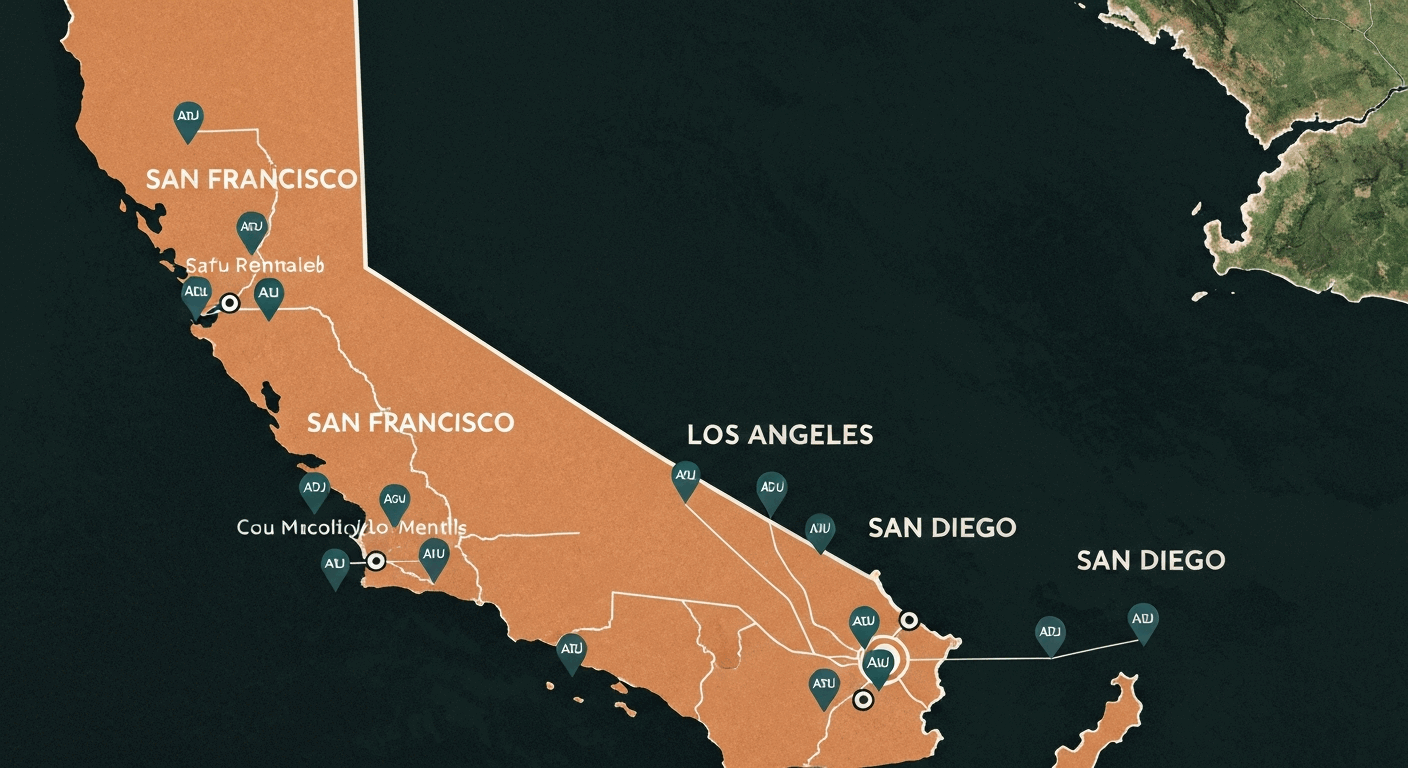
ADU Rules Across California’s Major Metros: SF, LA, San Diego
While state laws like SB 9 and SB 10 provide a strong foundation for ADU development, specific local regulations can still vary slightly from city to city, particularly regarding design standards, setbacks, and parking requirements. Understanding these nuances is key to a smooth and compliant build process, ensuring your project meets all necessary criteria and avoids costly delays.
San Francisco ADU Rules
San Francisco has been an early adopter of ADU-friendly policies, actively encouraging ADUs as a vital way to increase density and affordability in one of the nation’s most expensive housing markets. Key aspects include:
- Zoning: ADUs are generally permitted in all residential zoning districts, including single-family and multi-family, making them widely accessible.
- Size: Maximum ADU size is typically 850 sq ft for a one-bedroom and 1,000 sq ft for multiple bedrooms, or 50% of the primary dwelling’s living area, whichever is less. Junior ADUs (JADUs) are limited to 500 sq ft and must be contained within the existing footprint of a single-family home.
- Setbacks: Often allows zero-foot setbacks for detached ADUs in specific scenarios, and usually 4-foot side and rear setbacks for new construction, as mandated by state law. This flexibility can significantly reduce construction costs and maximize usable backyard space.
- Parking: Parking is generally not required for ADUs in San Francisco, especially near public transit or if a garage is converted. This significantly reduces project complexity and cost, as creating new parking can be expensive and space-intensive.
- Rent Control: Newly constructed ADUs may be exempt from rent control for a period, which is a significant incentive for landlords to invest in new housing, offering more predictable returns.
Los Angeles ADU Rules
Los Angeles is a hotbed for ADU construction, with the city actively promoting them to address its severe housing shortage. LA’s rules are generally very permissive and aim to streamline the process, making it easier for homeowners to add value and housing to their properties:
- Zoning: ADUs are allowed on all single-family and multi-family residential lots that meet minimum lot size requirements, ensuring broad applicability.
- Size: Detached ADUs can be up to 1,200 sq ft, or 50% of the main dwelling, whichever is less. Junior ADUs (JADUs) are limited to 500 sq ft and must be contained within the existing footprint of a single-family home.
- Setbacks: State law generally mandates 4-foot side and rear setbacks, which LA adheres to. Garage conversions typically have no setback requirements, making them a popular and often more affordable choice.
- Parking: Parking is often waived for ADUs located within a half-mile of public transit, if the ADU is part of an existing structure, or if a car share vehicle is available within one block. This significantly reduces the hurdles for many urban properties.
- Permitting: The city has streamlined its permitting process, including offering pre-approved ADU plans and an online portal to accelerate construction and reduce bureaucratic hurdles, saving homeowners time and potential frustration.
San Diego ADU Rules
San Diego has also enthusiastically embraced ADUs as a critical component of its housing strategy. The city has made significant efforts to simplify the process for homeowners, focusing on speed and accessibility to encourage more development:
- Zoning: ADUs are permitted in all residential zones, including those previously restricted, opening up opportunities across the city.
- Size: Similar to LA, detached ADUs can be up to 1,200 sq ft, or 50% of the main dwelling, whichever is less. JADUs are up to 500 sq ft. There are also allowances for multiple ADUs on multi-family lots, further expanding housing options.
- Setbacks: State-mandated 4-foot side and rear setbacks apply to new detached ADUs. Existing structures converted to ADUs typically retain their original setbacks, simplifying conversions.
- Parking: Parking requirements are often waived, especially if the ADU is within a half-mile of public transit, in a historic district, or part of an existing structure. This greatly reduces the cost and complexity for many homeowners, especially in denser areas.
- Expedited Review: San Diego offers an expedited review process for ADU permits, aiming to reduce wait times and get projects approved faster, recognizing the urgency of increasing housing supply.
While these summaries provide a general overview, it is always crucial to verify the most current regulations with your specific city’s planning department or a qualified ADU consultant, as rules can evolve and local interpretations may vary. A professional can help navigate the specifics for your property.
Ready to build your ADU but need to understand the local rules?
Let’s discuss how HELOC financing can support your project, no matter your city’s specifics.
Typical ADU Construction Costs in California
The cost of building an ADU in California can vary widely based on several factors: the ADU’s size, type (attached, detached, garage conversion, JADU), quality of finishes, site conditions, local labor costs, and permitting fees. However, it’s helpful to have a general range to start your financial planning and understand the potential investment. Keep in mind that these are estimates, and actual costs can fluctuate.
Generally, you can expect ADU construction costs in California to fall into these broad categories:
- Garage Conversion: This is often the most affordable option, as it utilizes an existing structure and foundation. Costs typically range from $80,000 to $150,000. This includes structural modifications, new plumbing, electrical, insulation, and finishes. The existing footprint can save significantly on foundation and framing costs.
- Attached ADU: Building an ADU that’s attached to your main home (e.g., adding a new wing or expanding an existing footprint) generally costs between $150,000 and $250,000. You’re leveraging some existing infrastructure and utility connections, but still building new space that needs to be seamlessly integrated with the primary residence.
- Detached ADU (New Construction): This is usually the most expensive option, as you’re building a completely new structure from the ground up, requiring new foundations, separate utility connections (though often tied to the main house), and all new framing. Costs commonly range from $200,000 to $400,000+, depending heavily on size, finishes, and specific site challenges like grading or utility trenching. For a 600-800 sq ft detached unit in high-cost areas like the Bay Area or coastal Southern California, expect to be in the upper end of that range.
- Junior ADU (JADU): Often the least expensive, ranging from $40,000 to $100,000, as they are smaller (up to 500 sq ft) and contained within the existing footprint of the main home, typically sharing a bathroom or kitchen facilities.
It’s crucial to factor in all potential costs, including architectural and engineering plans, permit fees, utility hookups, and potential landscaping or site work, beyond just the construction itself. While the upfront investment can be significant, remember the long-term benefits of increased property value and rental income.
Concerned about ADU construction costs?
A HELOC offers a flexible way to fund your project, allowing you to manage expenses as they arise.
Navigating Your ADU Project: Key Steps to Success
Building an ADU can seem like a daunting task, but breaking it down into manageable steps can make the process much smoother. Here’s a general roadmap to guide you:
- Research & Planning: Start by understanding your local ADU ordinances. Visit your city’s planning department website or consult with an ADU specialist. Consider your goals: rental income, family housing, or flexible space.
- Financial Assessment: This is where a HELOC comes in. Determine how much equity you have and what your borrowing capacity is. Get pre-qualified to understand your budget before design.
- Design & Permitting: Hire an architect or designer experienced with ADUs in California. They will help you create plans that meet both your vision and local codes. Submit your plans for permitting – this can be the longest phase, so patience is key.
- Contractor Selection: Obtain bids from several licensed and insured contractors. Look for those with specific ADU construction experience. Ensure a clear contract outlining scope, timeline, and payment schedule.
- Construction: This is the exciting part! With a HELOC, you can draw funds as construction milestones are met, paying your contractor in phases as work is completed and inspected. Regular communication with your contractor is vital.
- Final Inspection & Occupancy: Once construction is complete, the city will conduct a final inspection. Upon approval, you’ll receive a Certificate of Occupancy, allowing you to move in or rent out your new ADU.
Each step requires careful attention, and having your financing in place early on will provide peace of mind throughout the entire process.
Unlock Your Property’s Potential with a California ADU and HELOC
The opportunity for California homeowners to build an ADU is unprecedented, thanks to supportive state legislation and innovative financing options like a Home Equity Line of Credit. Whether your goal is to generate rental income, provide independent living for family, or simply increase your property’s value, an ADU offers a smart and strategic investment.
A HELOC’s flexible draw structure, competitive interest rates, and potential tax advantages make it an ideal partner for the phased nature of ADU construction. It allows you to manage your project’s cash flow efficiently, paying for expenses only as they arise, and preserving your existing low-rate first mortgage.
Don’t let the complexities of construction or financing deter you from realizing the full potential of your property. Take the first step today to understand your options and begin your journey toward building a valuable backyard rental or living space. Your California dream home could be about to get even better.
Ready to start your California ADU journey?
Discover your personalized HELOC options and get a real answer fast.
For Different Reader Perspectives
🏠 First-Time Buyer
Quick answer: If you buy a home in California with a yard, you might one day build a small rental unit (ADU) in the backyard. A HELOC lets you borrow against your home's value to pay for it. This could help you earn rental income or add space for family.
From Tim: First home first—but keep ADUs in mind for the future. Once you build equity, a HELOC could help you add a rental unit. It's a smart long-term play many CA homeowners use.
💼 Self-Employed
Quick answer: California ADUs can generate rental income and boost property value. HELOCs offer flexible financing for phased construction. As a 1099 earner, you may qualify using bank statements instead of W2s—your equity matters more than paystubs.
From Tim: Self-employed? Your tax returns might show lower income, but your equity spends the same. I help 1099 folks tap their home equity for ADU projects using bank statement programs when it makes sense.
🎖️ Veteran
Quick answer: California homeowners can build ADUs for rental income or family housing. HELOCs offer flexible financing for construction costs. For veterans, this could complement VA loan benefits if you're looking to maximize your property investment.
From Tim: If you bought with a VA loan and built equity, a HELOC for an ADU could generate income to offset your mortgage—smart way to let your property work for you while you serve or transition out.
🏘️ Investor
Quick answer: California ADUs can add rental units to your portfolio. HELOCs offer flexible draws for construction phases. May work with DSCR loans for investor properties, but watch debt ratios and portfolio loan limits when scaling.
From Tim: I help investors stack ADU income into their DSCR qualifications. The phased HELOC draw matches construction perfectly—just plan your exit strategy and long-term hold numbers first.
🏡 Refi / HELOC
Quick answer: California homeowners can use a HELOC to finance ADU construction with flexible, draw-as-needed access to equity. Compare HELOCs vs cash-out refis vs HELOANs based on your rates, timeline, and whether you need lump-sum or phased funding.
From Tim: HELOCs shine for ADU builds because you only pay interest on what you draw. If your first mortgage rate is low, keep it and add a HELOC rather than cash-out refinancing at today's rates.