 Tim Popp

🎯 TL;DR — Quick Answer
Tampa is one of the top short-term rental (STR) markets in the US, with year-round tourism driving strong Airbnb/VRBO cash flow. DSCR loans here qualify investors based on STR income, not W-2. Tim Popp (NMLS #2039627) originates Tampa STR DSCR loans.
Florida’s sunny shores and vibrant cities have long drawn visitors, and savvy investors are increasingly turning their attention to the Sunshine State’s booming short-term rental (STR) market. If you’re eyeing Tampa Bay as your next investment frontier, you’re in good company. This guide will walk you through leveraging DSCR loans to finance your Tampa STR properties, helping you navigate the unique opportunities and challenges of this dynamic market.
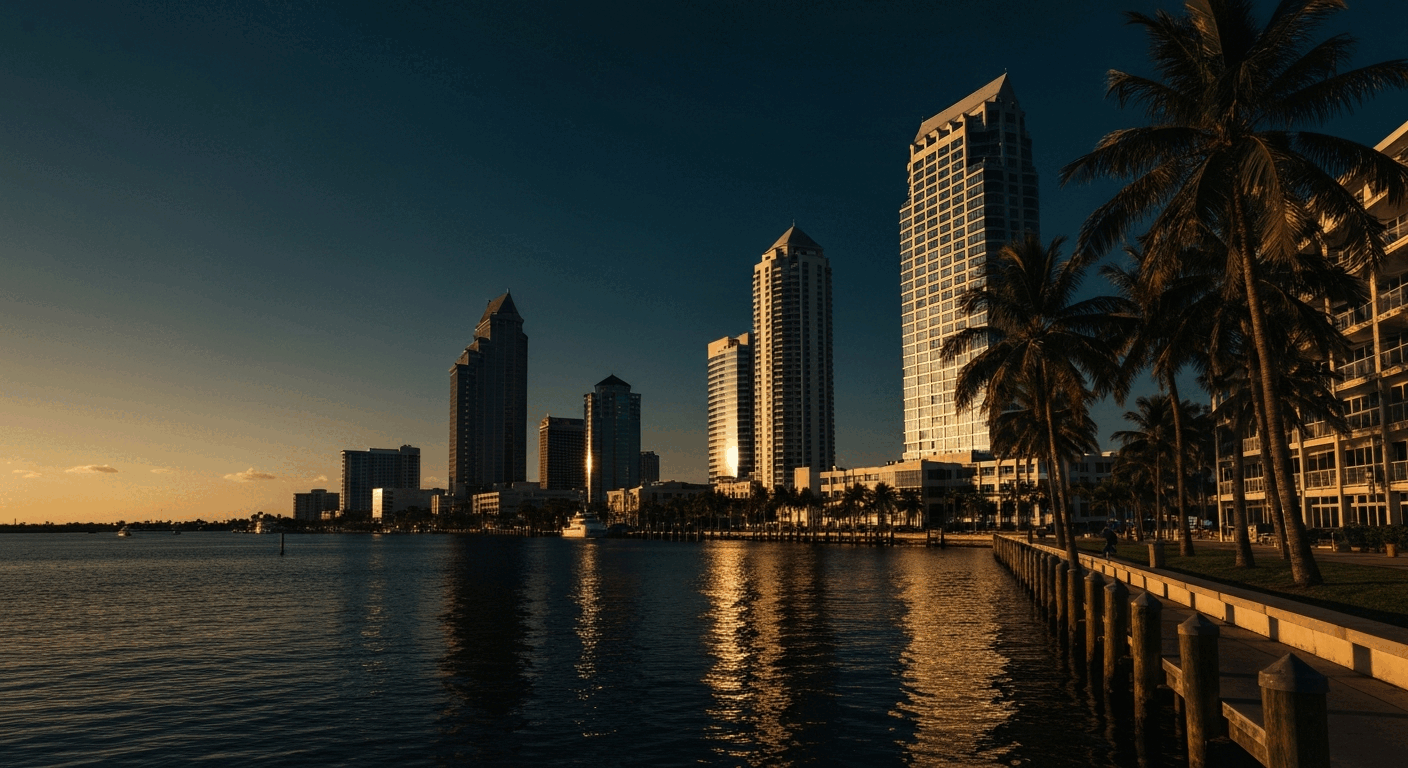
Why Tampa Bay is a Hotspot for Short-Term Rental Investors
📌 From Tim — In Practice
In my experience, Tampa is one of the easiest STR DSCR markets to underwrite. Year-round tourism (Disney spillover, Gulf beaches, Lightning hockey, Buccaneers) means consistent revenue. I help Tampa STR investors structure DSCR loans with AirDNA projections or 12-month rental history.
Tampa Bay isn’t just a vacation destination; it’s a rapidly growing economic hub attracting a diverse mix of tourists, business travelers, and new residents. This consistent demand fuels a robust STR market, offering attractive income potential for investors.
The region boasts a blend of attractions, from the historic charm of Ybor City to the family-friendly fun of Busch Gardens and the pristine beaches nearby. Major sporting events, conventions, and a thriving culinary scene keep visitors coming year-round. This diverse appeal translates into consistent occupancy rates for well-managed STR properties.
Tampa’s Unique Market Dynamics
Unlike some purely seasonal markets, Tampa offers a more balanced demand profile. While winter and spring break are peak times, business travel and local events maintain activity throughout the year. Understanding these ebbs and flows is crucial for optimizing your rental strategy and ensuring your property performs well.
Property values in Tampa have seen steady appreciation, and the rental market remains strong. This combination of capital appreciation potential and robust rental income makes Tampa Bay a compelling location for real estate investors looking for long-term growth and immediate cash flow.
Understanding DSCR Loans for Short-Term Rentals
Traditional mortgages often require extensive personal income documentation, which can be a hurdle for real estate investors. This is where DSCR loans shine. DSCR stands for Debt Service Coverage Ratio, and these loans are specifically designed for investment properties, focusing on the property’s income-generating potential rather than your personal income.
For short-term rentals, DSCR loans are a game-changer. They allow you to qualify based on the expected rental income of the property itself. This means less paperwork, a faster approval process, and the ability to scale your investment portfolio without tying up your personal income on your tax returns.
How DSCR Loans Work for STRs
The core principle of a DSCR loan is simple: the property’s net operating income (NOI) must be sufficient to cover its mortgage payments. For STRs, lenders calculate this by projecting the short-term rental income and deducting estimated operating expenses.
Unlike long-term rentals where a lease agreement provides clear income figures, STRs require a more nuanced approach to income verification. Lenders rely on specialized short-term rental data and analysis to determine a conservative estimate of the property’s potential income.
To learn more about how these loans operate across the state, be sure to check out our comprehensive Florida DSCR loans guide.
Ready to see what you qualify for?
See your options in minutes — we’ll get you a real answer fast.
Leveraging AirDNA and Other Data for DSCR Underwriting
When applying for a DSCR loan for an STR, demonstrating the property’s income potential is paramount. This is where data platforms like AirDNA become invaluable. AirDNA provides granular, market-specific data on short-term rental performance, including average daily rates (ADRs), occupancy rates, and revenue per available rental (RevPAR).
The Role of AirDNA Reports
Lenders typically require a third-party AirDNA report or a similar market analysis to validate your projected rental income. This report provides an unbiased, data-driven assessment of what a similar property in the same area could realistically generate. It helps mitigate risk for lenders and provides a solid foundation for your loan application.
What an AirDNA Report Typically Shows:
- Comparable Properties: Data from similar STRs in the immediate vicinity.
- Historical Performance: Past occupancy and revenue trends for the area.
- Projected Income: A conservative estimate of the subject property’s potential gross revenue.
- Seasonal Adjustments: How income might fluctuate throughout the year.
This detailed analysis allows underwriters to calculate a realistic Debt Service Coverage Ratio. A DSCR of 1.0 means the property’s income exactly covers the debt. Lenders generally look for a DSCR of 1.15 to 1.25 or higher, indicating a healthy buffer.
Beyond AirDNA: Other Income Documentation
While AirDNA is a primary tool, you might also use other forms of income documentation:
- Pro Forma Statements: If you have experience with STRs, you can create a detailed projection based on your management strategy.
- Appraisal Reports: Some appraisers include STR income analysis as part of their valuation.
- Rental Comps: Similar to sales comps, these are recent STR rental rates for comparable properties.
The goal is always to present a clear, credible picture of the property’s ability to generate sufficient income to cover its mortgage and operational expenses.
Navigating Tampa’s Neighborhoods for STR Investments
Tampa offers a diverse array of neighborhoods, each with its own character and STR investment potential. Choosing the right location is critical for maximizing your returns and ensuring compliance with local regulations.
Ybor City: Historic Charm and Nightlife
Ybor City, a National Historic Landmark District, is famous for its vibrant nightlife, Cuban cigars, and unique cultural events. Properties here can command strong STR rates, particularly from visitors seeking an authentic Tampa experience and proximity to entertainment venues.
- Pros: High demand from tourists and event-goers, unique appeal.
- Considerations: Potential for noise complaints, parking challenges, some areas may have specific STR regulations.
South Tampa: Upscale and Convenient
South Tampa, encompassing areas like Hyde Park, Bayshore Beautiful, and Palma Ceia, is known for its upscale homes, tree-lined streets, and proximity to downtown, the airport, and major hospitals. This area attracts a mix of business travelers, families, and those seeking a more luxurious stay.
- Pros: Strong year-round demand, higher ADRs for quality properties, appealing to corporate rentals.
- Considerations: Higher property values, potentially stricter HOA rules in some communities.
Other Promising Tampa Neighborhoods
Don’t limit yourself to just Ybor and South Tampa. Other areas warrant consideration:
- Downtown Tampa: Ideal for business travelers and convention attendees, often with condo units.
- Channelside District: Modern condos near the port, appealing to cruise passengers and urban explorers.
- Seminole Heights: Up-and-coming area with historic bungalows and a burgeoning food scene, attracting a trendier crowd.
- Near Beaches (e.g., St. Pete Beach, Clearwater Beach): While not technically Tampa, properties in nearby beach towns are highly sought after for vacation rentals and offer different dynamics.
Always research local zoning ordinances and STR regulations before investing in any specific neighborhood. Tampa, like many cities, has specific rules regarding short-term rentals, and compliance is non-negotiable.
Unique Challenges: Insurance and Condo Warrantability in Florida
Investing in Florida, particularly in coastal areas like Tampa Bay, comes with specific considerations regarding insurance and, for condo units, warrantability.
Florida STR Insurance: More Than Just Homeowner’s
Standard homeowner’s insurance policies are typically insufficient for short-term rental properties. You’ll need specialized STR insurance, often called “landlord insurance” with additional short-term rental endorsements, or a commercial policy. Florida’s hurricane risk also means higher wind and flood insurance premiums, especially for properties near the coast.
- Wind Insurance: Often separate from standard hazard insurance in Florida, and mandatory in many coastal zones.
- Flood Insurance: Required for properties in designated flood zones. Even if not required, it’s often a wise investment.
- Liability Coverage: Crucial to protect against guest injuries or property damage.
Factor these higher insurance costs into your financial projections. They will impact your net operating income and, consequently, your DSCR calculation.
Condo Warrantability: A DSCR Loan Hurdle for Some
If you’re considering a condo for your STR investment, understanding condo warrantability is critical. Many conventional and government-backed loans have strict requirements for condo complexes. While DSCR loans are generally more flexible, lenders still have criteria to ensure the financial health and stability of the complex.
Key Condo Warrantability Factors for DSCR Loans:
- Litigation: Complexes involved in significant litigation may be deemed unwarranted.
- Reserves: Adequate reserve funds for future repairs and maintenance are essential.
- Owner Occupancy: While DSCR loans are for investors, some lenders prefer a certain percentage of owner-occupied units.
- HOA Delinquencies: A high percentage of owners delinquent on HOA dues can be a red flag.
- Commercial Space: The ratio of residential to commercial space within the complex can be a factor.
- STR Restrictions: Most importantly, the HOA must not have any restrictions against short-term rentals. This is non-negotiable.
It’s vital to obtain and review the condo association’s declaration, bylaws, and financial statements early in the process. Your lender will require these documents for review.
Investing in Tampa’s short-term rental market with a DSCR loan offers a powerful pathway to financial growth. By understanding the market dynamics, leveraging data, choosing the right locations, and preparing for specific Florida challenges like insurance and condo warrantability, you can build a thriving STR portfolio. Are you ready to explore your options and capitalize on Tampa’s potential?
Ready to take the next step in your Tampa STR investment journey? Get started with Tim Popp and West Capital Lending today to discuss your DSCR loan options. Tim Popp, Branch Manager at West Capital Lending. NMLS #2039627. Licensed in 37 states + DC including Florida.
📍 Local Market Guide
For more on dscr loans specific to Florida, see Tim’s full Florida dscr loans guide:
Talk to Tim about your deal
Whether you’re buying your first rental or your twentieth — straight answers, no runaround.
Tim Popp, NMLS #2039627 | West Capital Lending | Licensed in 37 states + DC. This content is for informational purposes only and does not constitute a commitment to lend or a guarantee of loan approval. All loan programs subject to borrower eligibility, property requirements, and lender terms.
For Different Reader Perspectives
🏠 First-Time Buyer
Quick answer: This article is about investment properties, not first-time home buying. It covers special loans (DSCR) used by people who buy houses to rent out short-term. If you're buying a home to live in, you'll likely use a different loan type.
From Tim: If you're buying your first home to live in, this isn't the right fit. Let's talk about options made for owner-occupied homes—usually easier to qualify for and better rates for first-timers.
💼 Self-Employed
Quick answer: Tampa STR investing with DSCR loans means qualifying on property income, not your 1099 income. Perfect if your tax returns don't show your full earning potential. No W2s or complex self-employment docs needed.
From Tim: As a fellow business owner, I get it—your tax returns don't tell the whole story. DSCR loans let the property's income do the talking, and we have Bank Statement options too.
🎖️ Veteran
Quick answer: Tampa STR investing uses DSCR loans that qualify on rental income, not personal income. Great for scaling beyond your VA primary residence. DSCR works when VA eligibility is tied up or for pure investment properties.
From Tim: Love your VA benefit for your primary, but DSCR opens the investor door without W-2s. Perfect when your entitlement is in use or you're ready to build a portfolio beyond owner-occupancy.
🏘️ Investor
Quick answer: Tampa STRs offer year-round cash flow, not just seasonal spikes. DSCR loans let you qualify on the property's income, not yours—critical for scaling past conventional limits. Less paperwork, LLC-friendly, and built for portfolio growth.
From Tim: DSCR is how serious investors scale beyond 10 properties. Tampa's consistent demand makes the income calc work in your favor. I help structure these for long-term portfolio play, not just one-offs.
🏡 Refi / HELOC
Quick answer: If you own a home, you could tap its equity to fund a Tampa STR investment. DSCR loans let the rental property qualify on its own income, while a HELOC or cash-out refi unlocks capital from your current home for the down payment.
From Tim: I often help clients use a HELOC for their STR down payment—keeps your primary mortgage intact. We can compare that against a cash-out refi depending on your rate and equity position.